
Happy Hour Desktop
Il modo più semplice per scoprire ristoranti e caffetterie nelle vicinanze con sconti in tempo reale è l'Happy Hour
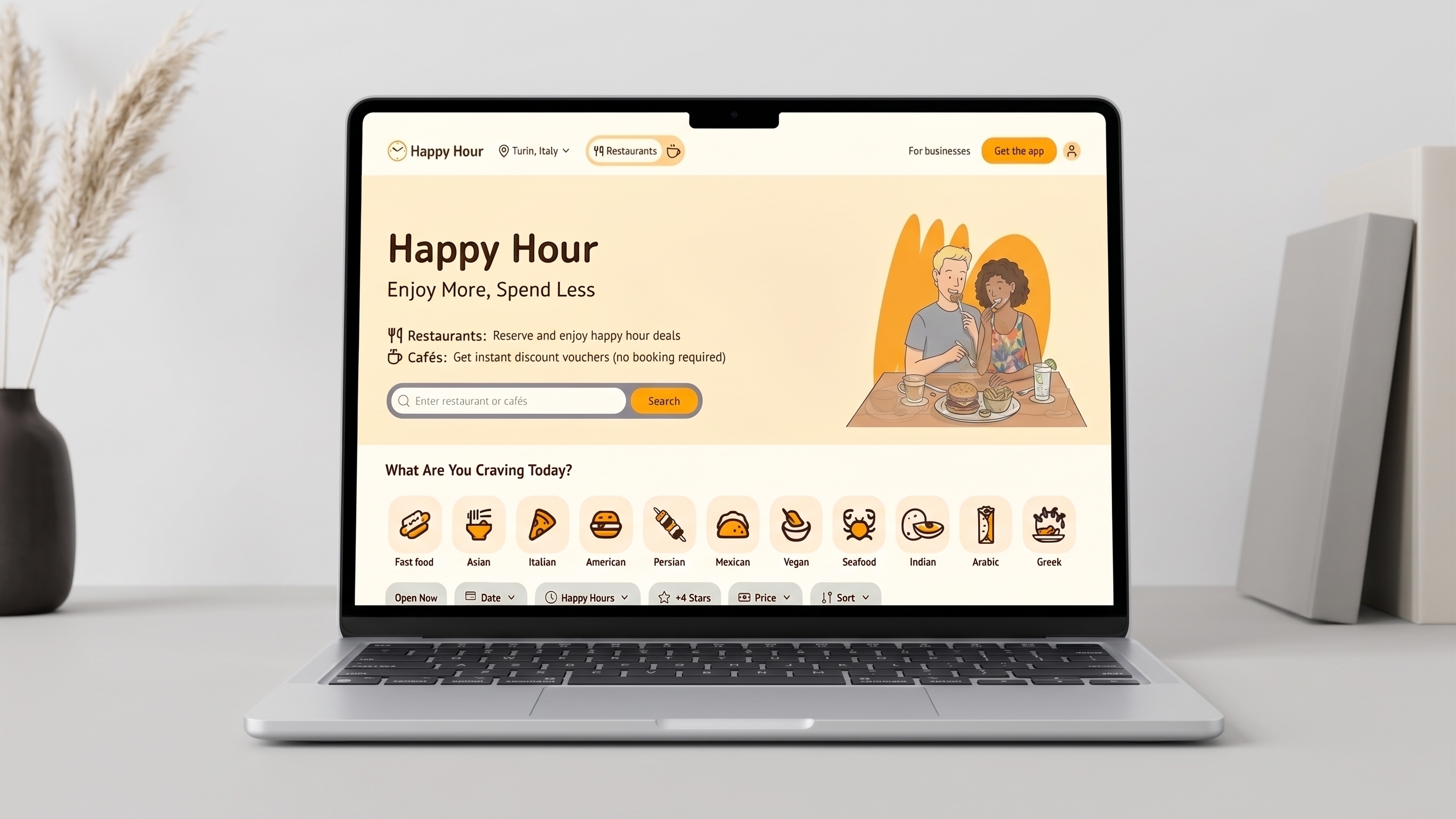
Intestazione panoramica
Happy Hour è una piattaforma che mette in contatto gli utenti con le offerte di ristorazione nelle vicinanze. I ristoranti propongono menu Happy Hour con prenotazione diretta al tavolo; i caffè offrono buoni sconto a tempo limitato. Tutto ciò di cui gli utenti hanno bisogno per mangiare bene a meno, in un unico posto.
Problem Statement
- Informazioni obsolete: menu, prezzi e recensioni sono spesso falsi o vecchi.
- Confusione sugli sconti: gli sconti e i voucher non sono verificati, sono disorganizzati o hanno regole nascoste.
- App ingombranti: layout sovraffollati e filtri di ricerca imprecisi.
- Prenotazione mobile senza interruzioni: gli utenti si aspettano prenotazioni digitali rapide e all-in-one piuttosto che telefonate tradizionali.
Design Method
We used the Double Diamond process to guide our research and design decisions.
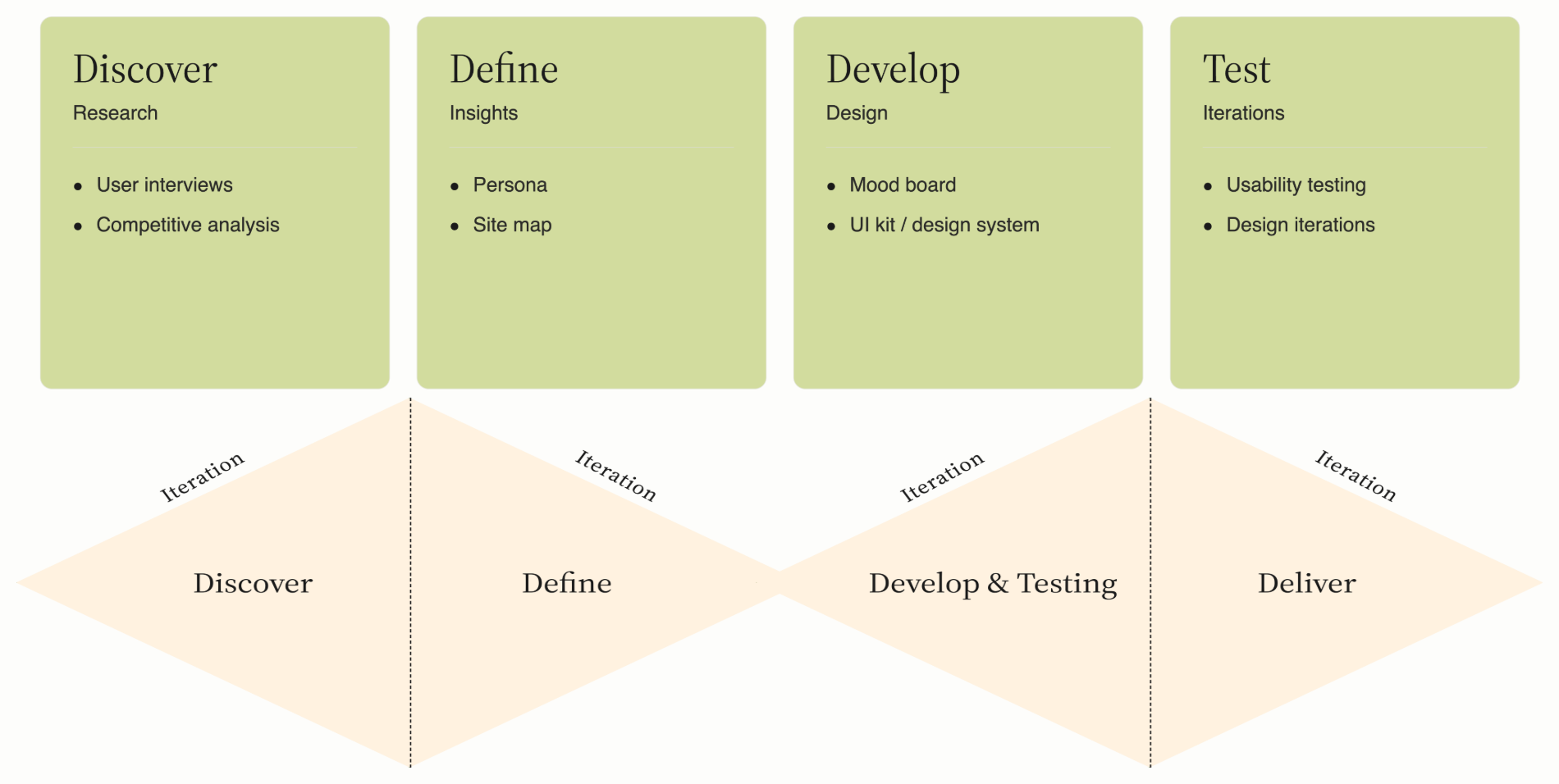
Discover
We began by looking at how people search for restaurant deals, compare their options, and reserve a table. This helped us identify where the booking process could become confusing or difficult.
Interview
We used user interviews to explore what people need when searching for restaurant offers and making a reservation.
- Participants: 14 users interviewed.
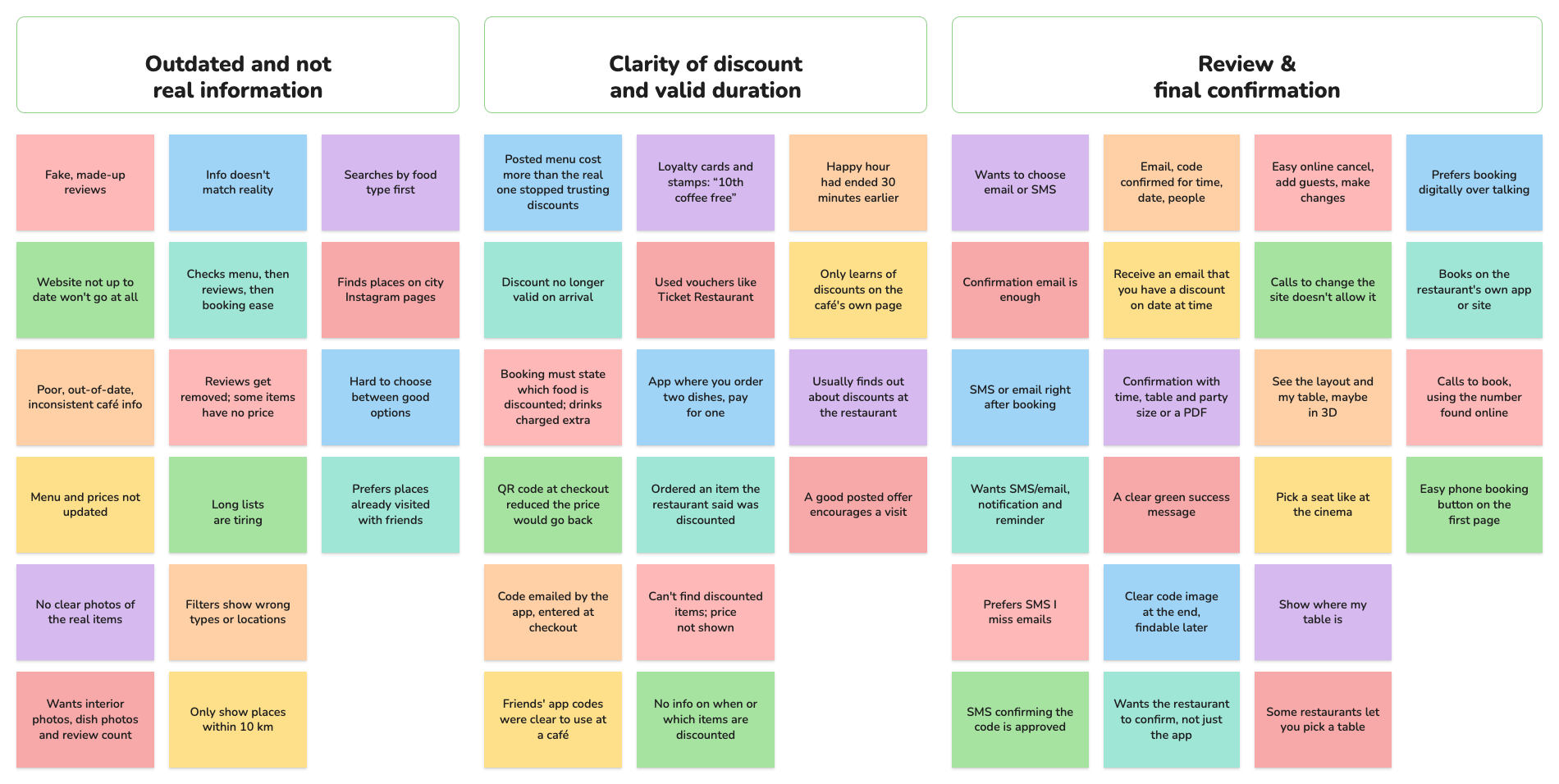
- Analysis: Responses grouped in an affinity diagram to identify common pain points and needs.
Affinity Diagram
User challenges
Outdated restaurant details
Menus, prices, photos, and available offers do not always match what users find at the restaurant. This makes it harder to choose where to eat.
Unclear offer conditions
Users may not know which menu items are included, when a discount applies, or whether they need to book a specific time to use it.
Uncertain reservation status
After reserving a table, users need a clear confirmation with the restaurant name, date, time, party size, and offer details somewhere they can easily find it again.
Competitive Analysis
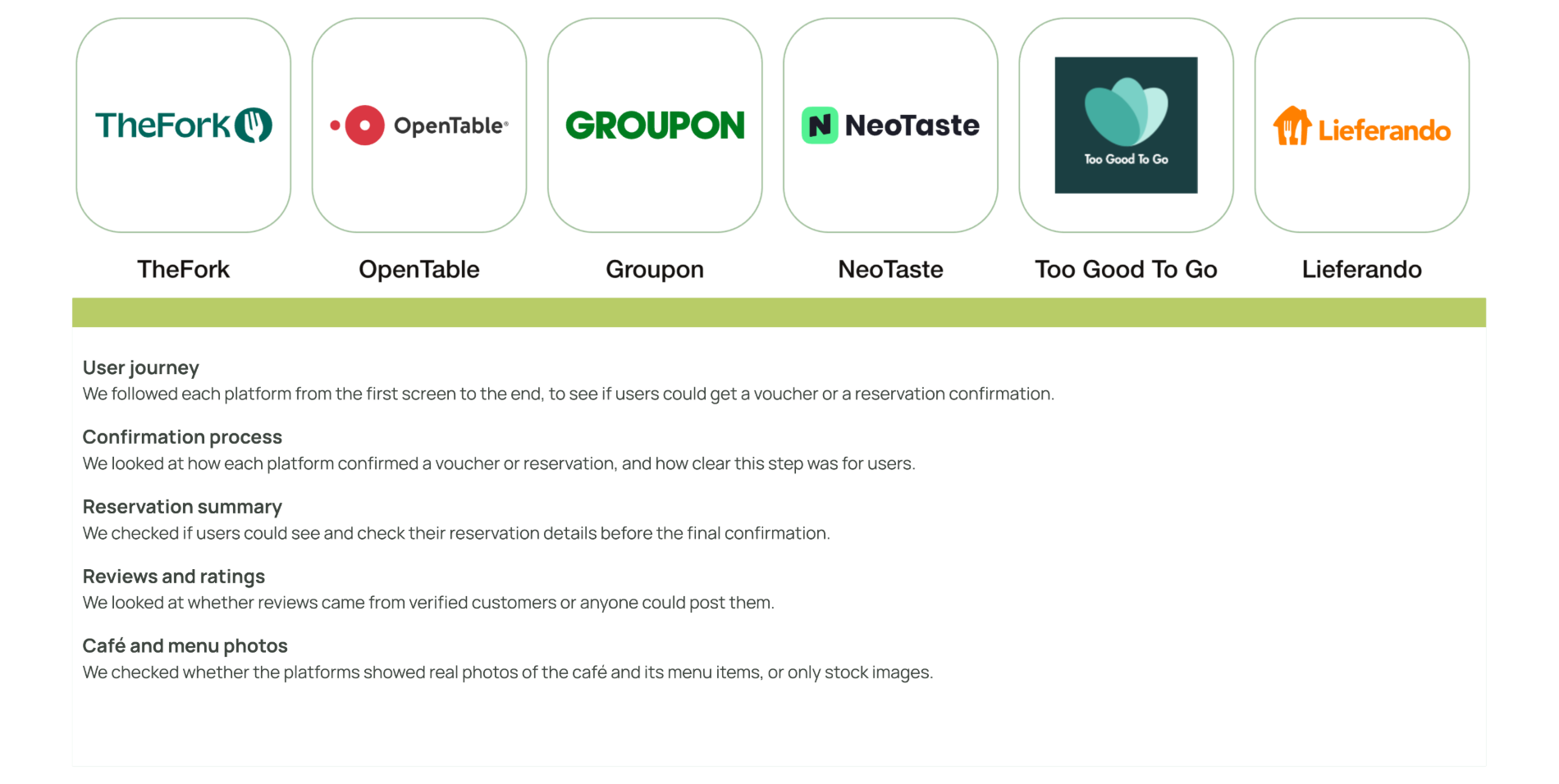
To better understanding, we analyzed platforms such as TheFork, OpenTable, Too Good To Go, GROUPON, NeoTaste and Lieferando to identify weaknesses, strengths, and opportunities for improvement.
Results & Impact
Due cicli di test di usabilità (12 partecipanti aggiuntivi) hanno convalidato i flussi di ricerca, filtro e prenotazione riprogettati, affinando la gerarchia visiva, riducendo lo sforzo di ricerca e rendendo il processo di prenotazione più trasparente da un capo all'altro.
Reflection
What Did I Learn?
Questo progetto ha rafforzato l'importanza di convalidare le ipotesi attraverso la ricerca piuttosto che l'intuizione. Durante il processo, ho imparato come le piccole decisioni di progettazione possono influenzare in modo significativo il carico cognitivo, la fiducia nelle decisioni e l'esperienza complessiva dell'utente. Ha inoltre evidenziato il valore dell'iterazione e della collaborazione nella creazione di prodotti più intuitivi e incentrati sull'utente.
Research over intuition
Assumptions about what users find confusing are almost always wrong. Structured interviews changed the direction of the design in ways we could not have predicted.
Small decisions, big impact
Changing button sizes and repositioning a single section reduced error rates measurably. Micro-decisions are not micro in their effect.
Iteration is the work
The most valuable design artefacts were not the final screens — they were the changes made between rounds of testing.